
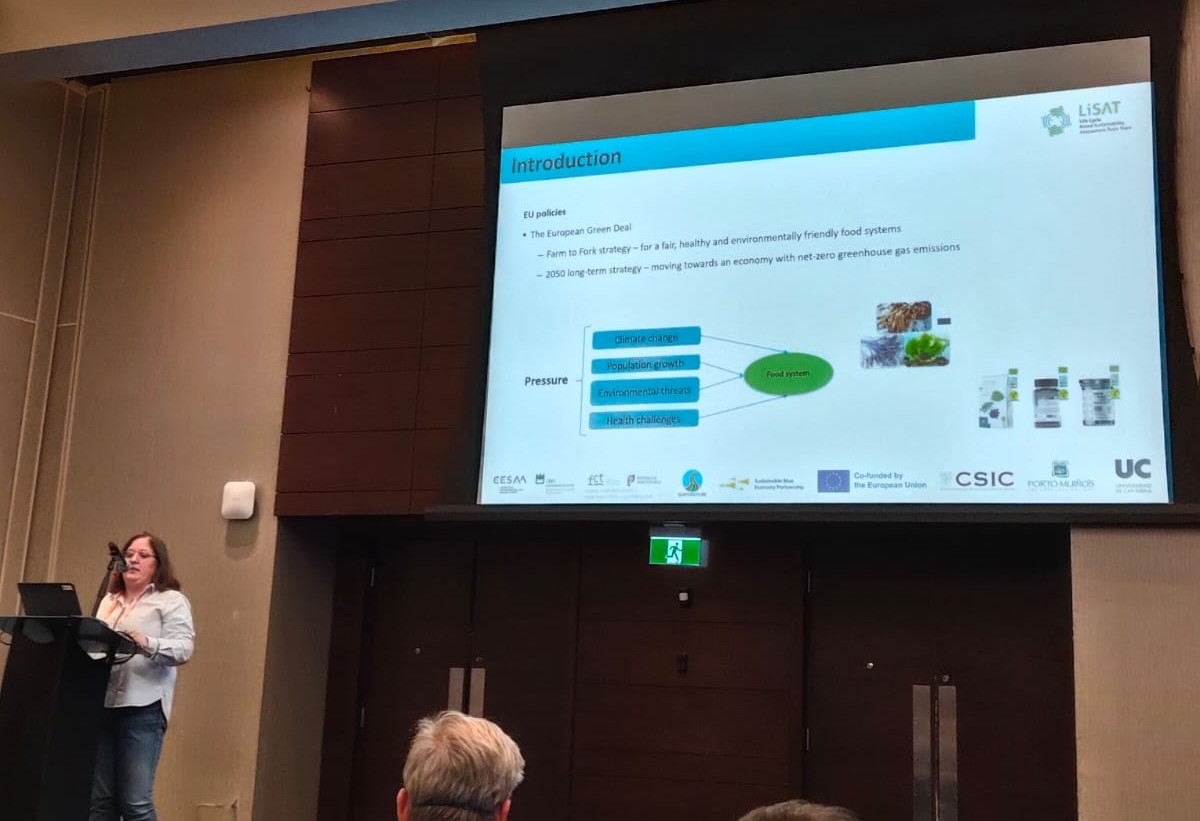
Paula Quineiro presented the scientific study “Integrating environmental and nutritional assessment of fresh seaweeds” at the LCA Food Conference held from 12-15. Oktober in Canada.
The global food system is increasingly unable to meet growing demand without intensifying environmental, socioeconomic and health pressure, highlighting the urgent need to transition food production and consumption away from resource-intensive and emission-intensive pathways.
To address these challenges, the Farm-to-Fork Strategy, part of the European Green Deal, aims to accelerate the transition to fair, healthy, and environmentally sustainable food systems (European Commission, 2019).
Seaweeds are emerging as a promising alternative food resource, providing high-quality proteins, key micronutrients and bioactive compounds linked to better metabolic, cardiovascular, and immune health. When properly processed and incorporated into diets, seaweeds can help reduce micronutrient deficiencies, enhance overall protein quality, and lower sodium and saturated fat intake compared to many conventional processed foods.
Integrating Life Cycle Assessment with nutritional assessment (e.g., nutrient-density metrics or nutritional footprint) in seaweed-based value chains is crucial for identifying environmental and nutritional hotspots, and informing production-related, dietary, and policy decisions that promote more sustainable and health-supporting food systems.
This study aims to assess the environmental performance and nutritional footprint of fresh Ulva spp., a green seaweed wild-harvested on the Galician coast.
Read all about the study here: