A new research article featuring contributions from Gonzalo Garrido-Bañuelos, Guro Møen Tveit, Hanne Dalsvåg, Solveig Uglem, Marta Martínez-Sanz and Patricia Lopez-Sanchez has been published in Future Foods (December 2026).
Abstract:
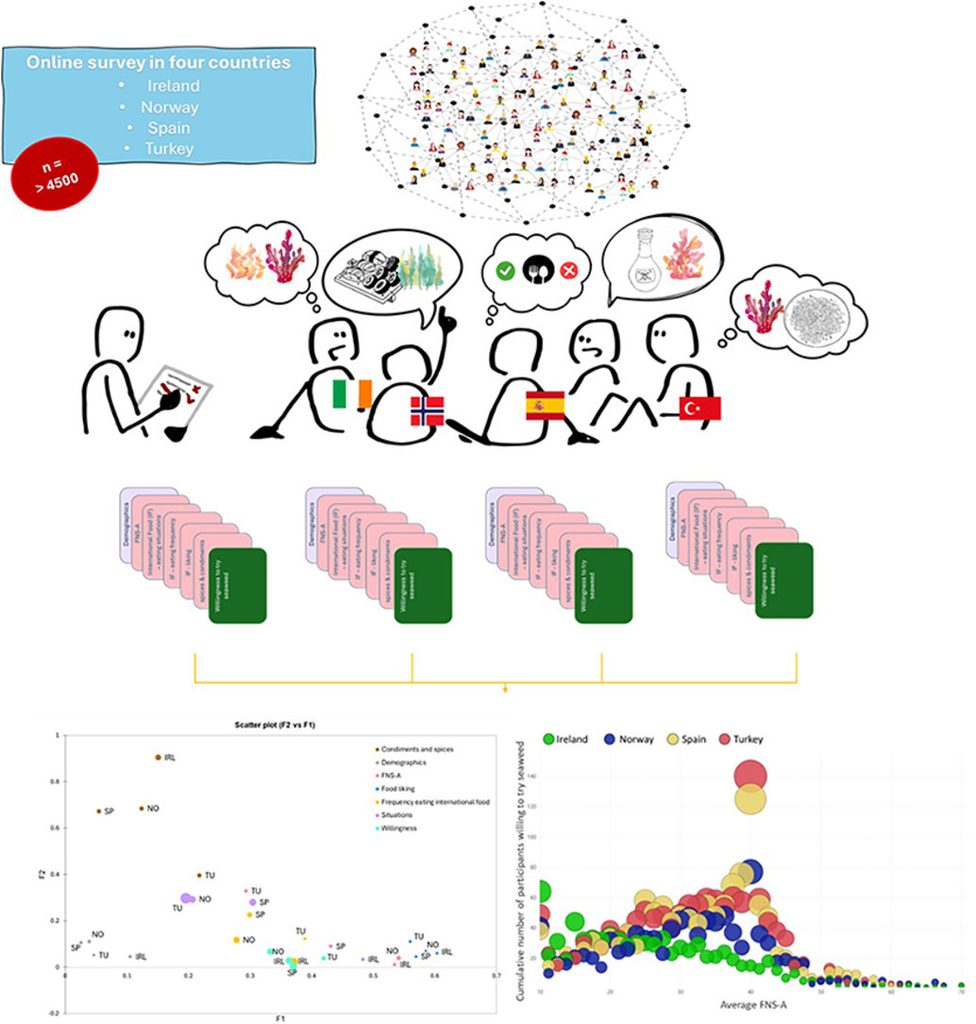
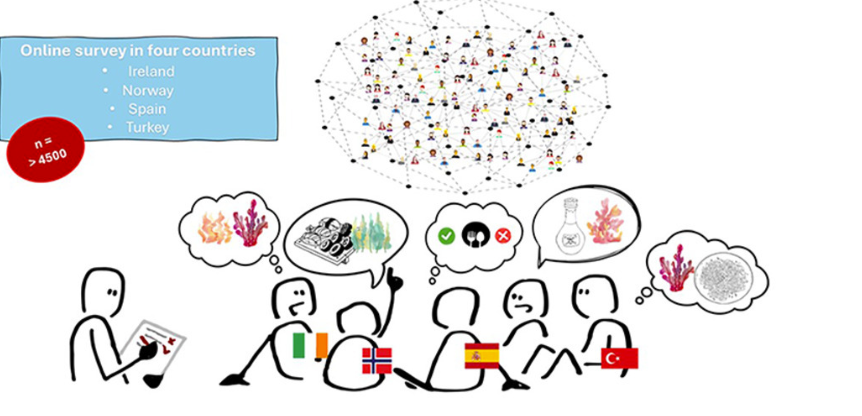
Seaweed could be considered a traditional element in many Asian cuisines; however, it remains exotic and rare in most Western diets. The current study conducted a cross-country online survey with over 4500 participants in four countries: Ireland, Spain, Norway and Turkey. The survey was structured in multiple sections to capture participants demographics, their level of food neophobia, eating behaviours and food preferences, and lastly their willingness to try seaweed products. Data were analysed following a multiblock approach using Multiple Factor Analysis (MFA) and including these variables as data blocks.
Results showed that participants willing to try seaweed had a lower average level of FNS-A; however, this was not equal in all countries. Participants living in coastal areas showed a higher willingness to try seaweed products than those living inland (except for Turkey). Additionally, a greater exposure to different international food styles and the liking of food styles such as “East Asian” or “Central Asian” showed a positive relationship with consumers’ willingness to try seaweed. Food liking patterns were not the same for each country. Irish participants were found to be the most “adventurous” with 84% of participants classified as “food explorers”, and at the same time, Ireland was the country with the highest rate of participants willing to try seaweed. Conversely, Turkey had the highest percentage of “food traditionalists” which corresponded with the lowest rate of willingness to try seaweed. These results confirm the importance of food behaviours in willingness to try seaweed, and how these could help to tailor new prototypes to specific flavours or food styles.