

SEAFOODTURE presented a poster at the 20th Nordic Sensory Workshop in Helsinki last week and the topic generated good conversations along the way.
The topic of the poster was “what does it actually take to bring a seaweed-based protein ingredient to the European market?”
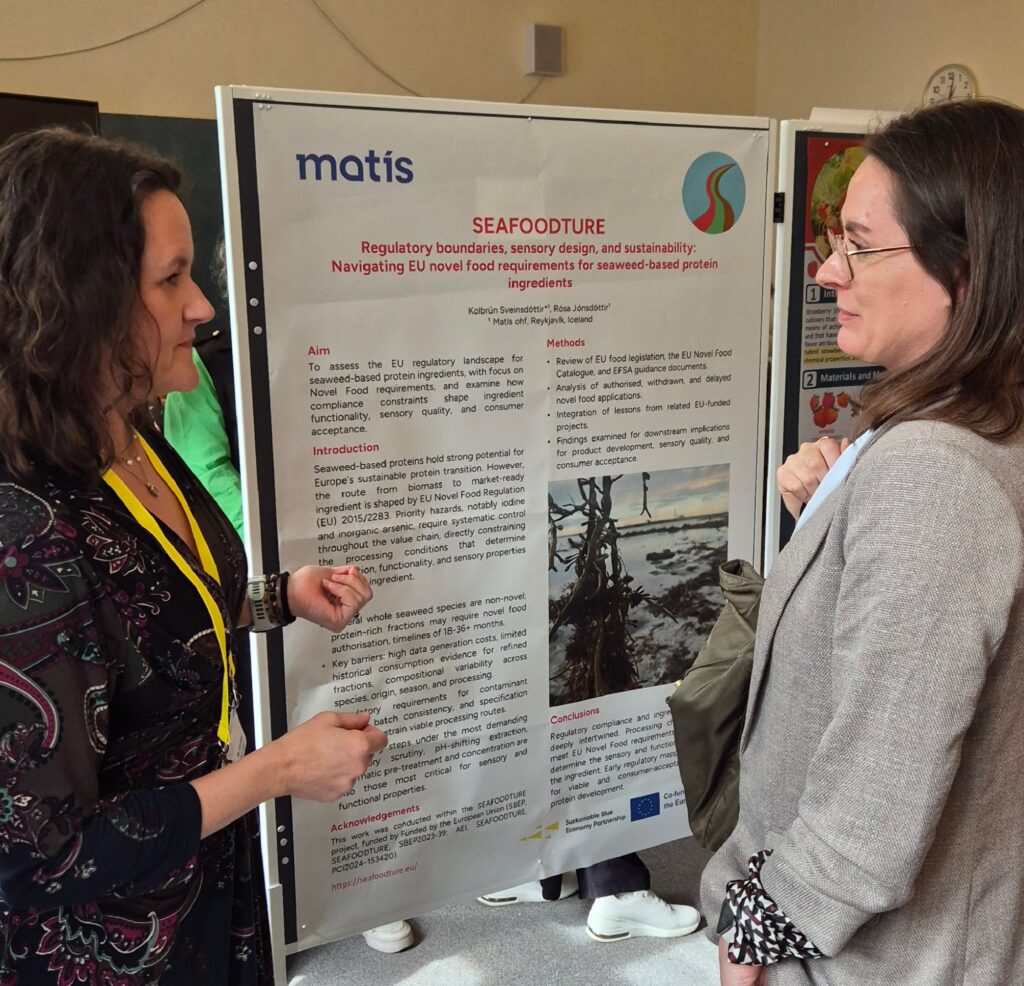
It was encouraging to see algae featuring more broadly across the workshop programme. A presentation in the young researcher session explored consumer sensory expectations of algae-based food products, covering egg, meat, and fish alternatives. The findings offered useful insights into what consumers actually look for when it comes to taste, texture, and appearance. On the novel food front, both a presentation and a poster examined culinary mushroom mycelium as a novel food source, looking at sensory evaluation, consumer acceptance, and technological functionality. This was a reminder that the regulatory and consumer acceptance challenges we face in SEAFOODTURE are part of a much wider conversation about the future of sustainable protein in Europe. The poster generated a lot of engagement, with particularly lively discussions around the different regulatory status of different species and processing methods, clearly a topic the wider seaweed innovation community is actively grappling with.
The Nordic Sensory Workshop, with its emphasis on dialogue between academia and industry, was an ideal venue to share these findings with a cross-sectoral audience of sensory scientists, food technologists, and industry professionals from across the Nordic and Baltic countries.
The poster was based on the work within SEAFOODTURE (Deliverable 4.5), where we mapped the EU regulatory landscape for seaweed-based protein-rich ingredients, with a specific focus on the novel food framework (Regulation EU 2015/2283). Key takeaways:
- Whole seaweed species are often non-novel, but protein-rich fractions produced through extraction or concentration usually require novel food authorisation, with timelines of 18-36 months or longer
- The processing steps subject to the most demanding regulatory scrutiny are the steps that shape sensory properties and functionality, – regulation and sensory quality are two sides of the same coin
- Regulatory considerations are best integrated early in the product development process, addressing them at a later stage is both more costly and time-consuming
- These findings are relevant beyond SEAFOODTURE, for anyone developing seaweed-based ingredients for the European market